Cash Jar - Win Real Money Easy
SpinZ Gaming LLCCasual
4.9203.00 Reviews
- Version
- 1.0.9
- Installs
- 100.00K
- Age Rating
- Teen
Screenshots
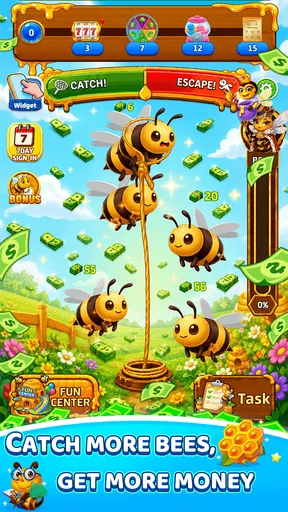

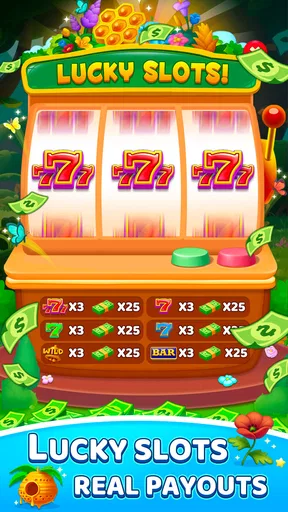
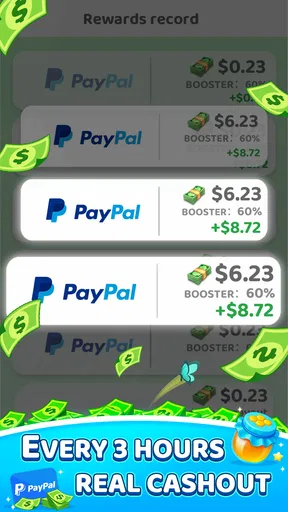

Our Review of Cash Jar - Win Real Money Easy
 Analysis by Appyee
I spent time with Cash Jar - Win Real Money Easy as a lightweight casual game built around a very simple promise: open it, tap, and work toward a reward you can cash out on a repeating schedule. That straightforward loop is the entire appeal. There is no complicated world to learn, no long tutorial to survive, and no need to reserve a large block of time. I could understand the basic idea almost immediately, which makes it approachable for people who want something quick rather than a demanding mobile game.
At the same time, the simplicity creates an important question: can tapping for rewards remain interesting after the first few sessions? My answer is mixed. The game is easy to pick up and may suit someone who likes checking a casual app during spare moments, but it is not the right choice for anyone expecting deep strategy, a substantial challenge, or a conventional arcade experience. Its strongest feature is accessibility, while its biggest weakness is that the progression can feel thin if the reward loop does not provide enough variety for you personally.
How the first few sessions establish the goal
The opening experience is deliberately direct. The central action is tapping, and the reward-oriented structure gives that action an obvious purpose from the beginning. I did not have to decode a complicated control scheme or learn several menus before making progress. For a casual player, that low entry barrier matters: the game can fit into a short break, a waiting room, or a few minutes before bed without demanding full concentration.
The recurring cash-out rhythm also gives the session a practical target. Rather than treating every tap as an isolated action, I found myself thinking in small intervals: check in, make progress, then return later when the next opportunity becomes relevant. That creates an early routine, although it is a routine based more on timing and anticipation than on traditional game mastery.
One useful way to approach it is to set a personal stopping point before you begin. If you tap without an informal limit, the activity can become repetitive quickly. I preferred treating each visit as a short check-in instead of trying to force a long session. That made the simple loop feel more intentional and helped prevent the game from becoming background noise.
The title is free, which makes experimenting with it easy. There is no purchase decision standing between a curious player and the first session. However, “free” should not be confused with guaranteed income. I view the cash theme as the game’s motivation, not as a substitute for a job or a dependable financial tool. Anyone installing it should be comfortable treating the experience as casual entertainment first.
What progress feels like in practice
Progress in this kind of game is communicated through the relationship between action and reward. Each tap needs to feel like it is contributing to an understandable goal, and the repeating cash-out window gives the player a reason to notice that movement. I found the clearest satisfaction came from seeing a small objective get closer rather than from the tapping itself.
That distinction is important. If you enjoy visible accumulation and short check-in goals, the design can feel pleasantly uncomplicated. If you need new abilities, changing environments, collectible sets, or increasingly demanding stages, the same design may feel underdeveloped. Cash Jar is not trying to compete with a puzzle game’s problem-solving or an idle game’s elaborate upgrade tree. Its progression is intentionally narrow.
I also recommend paying attention to the difference between a game action and a real-world reward expectation. The interface may make the journey feel game-like, but the practical value of a reward depends on the app’s own process and your ability to follow it. I would never tap continuously on the assumption that every session has the same outcome. Keeping expectations modest is one of the best ways to enjoy the app without feeling pressured.
The developer, SpinZ Gaming LLC, has positioned this as a casual game rather than a productivity or finance application. That classification matches my experience. It is something to open when you want a tiny distraction with a reward-shaped objective, not something I would use to manage money, plan a budget, or replace a more transparent rewards service.
Challenge and the shape of the difficulty curve
The main challenge is not reflex skill or tactical decision-making. Instead, the tension comes from patience, consistency, and deciding whether the next tap is worth your attention. That can be refreshing for players who dislike stressful games, but it also means the difficulty curve is gentle. I did not experience the escalating pressure that normally keeps a level-based casual game exciting.
For me, the pacing works best in short bursts. The game’s design encourages a player to return around its recurring reward timing, so the anticipation between visits becomes part of the experience. This is a different kind of pacing from a game that constantly introduces harder opponents or more complex puzzles. The question is less “Can I beat this?” and more “Do I want to check in again?”
That makes Cash Jar suitable for people who want low-friction interaction. Someone who finds standard mobile games exhausting may appreciate the absence of demanding controls. A parent looking for a quiet, brief distraction could understand it quickly, although I would still keep the cash-related expectations realistic. Likewise, a player who likes passive or semi-passive routines may find the scheduled rhythm more appealing than a game requiring uninterrupted attention.
On the other hand, players who need a strong sense of mastery should probably look elsewhere. There is little reason to practice a tapping action in the same way you would practice a difficult platforming sequence. The game’s challenge is mainly motivational: maintaining interest in a repetitive loop long enough to reach the next meaningful point.
Unlocks, goals, and the question of variety
The most important progression test here is whether the reward goal remains meaningful after the novelty fades. In my experience, the early objective is easy to understand, but the design does not automatically create the rich variety found in larger casual titles. The game’s appeal depends heavily on whether the prospect of another reward is enough to make a simple interaction feel worthwhile.
I found it helpful to create small personal milestones instead of expecting the app to provide a full campaign. For example, I could decide to check in only at a chosen time, or stop once I had completed a brief session. This turns the repeating action into a manageable routine. It is not an official progression system, but it is a practical way to give the loop shape and avoid mindless tapping.
Another useful habit is to judge the experience by the time it takes from you, not just by the reward language on screen. If a session begins to feel like work without delivering enough enjoyment, that is a sign to step away. A casual game should fit around your day. It should not make you feel obligated to monitor it constantly.
The app is marked for a Teen audience, so I would not present it as a children’s game. The combination of rewards, cash-out language, and a Teen content rating makes it more appropriate for users who can understand that in-app goals are not the same as guaranteed earnings. Parents should discuss that distinction rather than assuming the simple tapping format makes the experience suitable for younger children.
Retention pressure: routine or repetition?
The repeating three-hour cash-out rhythm is the clearest retention device in the experience. It gives you a reason to remember the app and creates a cycle of returning, tapping, and waiting. Used lightly, that can be a pleasant reminder. Used too aggressively, any scheduled reward loop can start to feel like pressure to keep checking a phone.
I would approach the timing as an invitation, not an obligation. There is no need to reorganize your day around a casual game. If you happen to open it at a convenient moment, make your progress and leave. Turning every available interval into a check-in may make the experience less enjoyable, especially because the core action itself is so simple.
This is where Cash Jar differs from ordinary alternatives in the casual category. A match-three game gives you changing boards and immediate problem-solving. A runner gives you a skill challenge that can improve with practice. A standard idle game often surrounds waiting with upgrades, production chains, or long-term optimization. Cash Jar instead puts the waiting and reward expectation at the center. It may be better for someone who wants a tiny routine, but weaker for anyone seeking variety during a longer session.
I also noticed a trade-off between convenience and transparency. The simple interface makes the app easy to understand, yet a simple interface can leave the player focusing almost entirely on the promised outcome. My advice is to read each on-screen instruction carefully, especially around reward progress and cash-out steps, and avoid assuming that tapping alone makes the result immediate. A careful, occasional approach is more sensible than treating the game like a financial opportunity.
Who will enjoy it, and who should skip it
I can recommend the game to a specific type of player: someone who likes uncomplicated mobile activities, enjoys checking progress in small intervals, and is comfortable with a reward-themed casual loop. It is also a reasonable option for people who do not want to learn complex mechanics. The low barrier means you can decide quickly whether the basic interaction suits you.
I would skip it if your main reason for playing is competition, creativity, exploration, or deep progression. It is not a replacement for a puzzle game when you want mental challenge, and it is not a replacement for a conventional rewards platform when you want detailed financial clarity. The cash-out theme may attract attention, but the actual entertainment value still comes from whether you enjoy the repeated tapping and waiting.
It may also be a poor fit for anyone prone to compulsive checking. The scheduled rhythm can encourage repeated visits, and the simplicity of the action makes it easy to keep going without noticing how much attention you are giving it. Setting a phone reminder is unnecessary; if you do use reminders, I would keep them limited and make sure the game does not interrupt work, sleep, study, or time with other people.
Everyday use: where the loop makes sense
Imagine having a few minutes while waiting for a bus or for a meal to arrive. A complex game would be inconvenient because you might need to stop suddenly, while Cash Jar can be understood and played in a brief window. You tap, check your progress, and close it when your time is up. Later, if you naturally remember the next reward interval, you can return without having to reconstruct a complicated strategy.
That scenario captures the app’s best use. It is a filler activity with a clear objective, not a game I would plan an evening around. I would not install it for a long commute if I wanted sustained entertainment, because the repetitive structure could become dull. For short gaps in the day, however, its simplicity is an advantage rather than a flaw.
A second sensible use is as a controlled check-in habit. I could open it once during a break, complete a small amount of progress, and then leave it alone. This keeps the reward loop from taking over the day. The key is treating the schedule as a boundary for occasional play, not as a demand to maximize every possible visit.
Technical fit and first-install expectations
The current version is 1.0.9, and the game supports devices running Android 8.0 or later. That makes the minimum software requirement relatively approachable for people using an older compatible Android phone, though actual comfort will still depend on the device and the way you use it. I would install it on a phone where notifications and account-related steps are easy for me to review rather than on a device I rarely check.
The game has reached over one hundred thousand installs, with an average rating of 4.9 from around two thousand ratings and just over two hundred written reviews. Those figures suggest that many users respond positively to the concept, but they do not replace personal judgment. A high average can tell me that the basic experience works for a large portion of its audience; it cannot guarantee that I will enjoy repetitive tapping or that my expectations about rewards will match the app’s flow.
Before committing time, I would make sure the app behaves as expected during the first few visits. I would look for clear progress feedback, understand how the repeating timing is presented, and read the steps involved in reaching a cash-out point. This is not about being suspicious of every screen; it is simply good practice whenever a game combines entertainment with reward language.
My progression verdict
Cash Jar has a clear early goal, an easy-to-follow progress idea, and a gentle difficulty curve. Its retention comes from scheduled reward anticipation rather than from increasingly complex play. That can be enough for a casual user who enjoys brief check-ins, but it will not satisfy players who want a deep system of unlocks or a steadily rising skill challenge.
My overall verdict is cautiously positive for the right audience. SpinZ Gaming LLC has kept the concept accessible, and the free entry point makes it easy to test. I like the fact that I can understand the basic loop quickly and fit it into a spare moment. I am less convinced by its long-term staying power, because repeated tapping needs a strong personal reason to remain enjoyable.
The best way to use Cash Jar is as a small casual diversion, never as dependable income. Keep sessions short, treat the three-hour rhythm as optional, check the reward process carefully, and stop if the repetition outweighs the fun. With those expectations, it can be a simple reward-themed game for occasional downtime. Without them, the promise of cash may create more pressure than entertainment.
For me, that makes the game easy to recommend selectively rather than universally. Try it if you want a minimal interaction and a recurring progress target. Choose a more traditional casual game if you want changing challenges, stronger mastery, or enough variety to support long sessions.
Verdict
Strengths of Cash Jar - Win Real Money Easy
- Simple interface makes it easy to navigate games and rewards.
- Offers multiple ways to earn, including games, tasks, and daily bonuses.
- Low-effort activities can fit conveniently into short free periods.
- Progress and reward balances are clearly displayed in the app.
- Suitable for casual users who enjoy trying different mini-games.
Limitations of Cash Jar - Win Real Money Easy
- Earnings per activity may be small and require considerable time.
- Some rewards or features may vary by location and account eligibility.
- Frequent ads can interrupt gameplay and slow down the experience.
- Cash-out requirements may delay access to earned money.
- The app may request personal details for account verification and payouts.
Similar Picks in This Category
View All
My Talking Angela
Outfit7 Limited4.2

My Talking Tom
Outfit7 Limited4.3

Pou
Zakeh4.2

My Talking Tom 2: Pet Game
Outfit7 Limited4.3

Candy Crush Saga
King4.6

Bridge Race
Supersonic Studios LTD4.1
Frequently Asked Questions
What is Cash Jar - Win Real Money Easy, and how does it work?
Cash Jar - Win Real Money Easy is a rewards app built around simple activities such as viewing advertisements, completing offers, playing featured games, or reaching in-app milestones. After collecting enough points or virtual currency, users may be able to request a payout through the methods supported in their region. The exact tasks, rewards, and withdrawal conditions can change, so reviewing the current in-app rules is important before investing significant time.
Can you really withdraw real money from Cash Jar?
The app presents itself as a way to earn real-money rewards, but earnings should be viewed as supplemental rather than guaranteed income. Whether a withdrawal is available depends on factors such as your country, account status, minimum payout threshold, verification requirements, and the availability of payment providers. Before completing tasks, check the withdrawal page carefully, including processing times, eligibility restrictions, and any conditions that could affect your final reward.
How much money can users realistically earn with Cash Jar?
The amount a user can earn is likely to vary considerably depending on the number of available offers, advertising inventory, location, device activity, and time spent using the app. In practice, reward applications generally provide small amounts for individual tasks, and reaching the minimum cash-out balance may take patience. Treat the app as an occasional rewards platform, not as a replacement for employment or a dependable source of income.
Is Cash Jar safe to use, and what personal information does it require?
Before signing up, users should examine the app’s privacy policy, permissions, developer information, and reviews on the official Google Play Store or Apple App Store. Rewards apps may request account details, device identifiers, advertising data, or information needed to process payments. Avoid providing unnecessary sensitive information, never share passwords or banking credentials through unofficial messages, and install the application only from a trusted official store listing.
What should I do if my points, offers, or withdrawal are not credited?
If an offer does not track correctly or a withdrawal remains pending, first confirm that you followed the offer instructions exactly and that the activity appears in your account history. Take screenshots of the offer, completion confirmation, and transaction details, then contact Cash Jar support through the official in-app channel. Do not repeatedly submit the same offer or use multiple accounts, since these actions may invalidate rewards or trigger account restrictions.
Play our best games!


